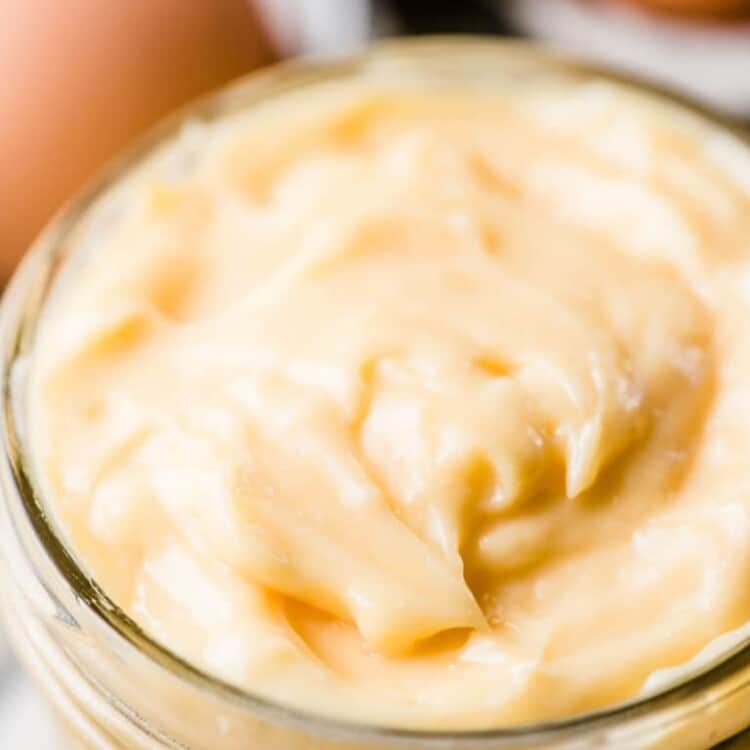
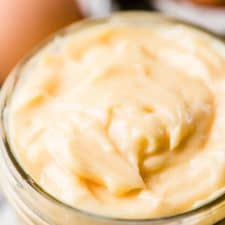
This homemade mayonnaise is my family’s favorite condiment, and it turns out perfectly every time. I’ll teach you how to make it in under 10 minutes with just four ingredients, and I’ll share all the tips I’ve learned over the years!
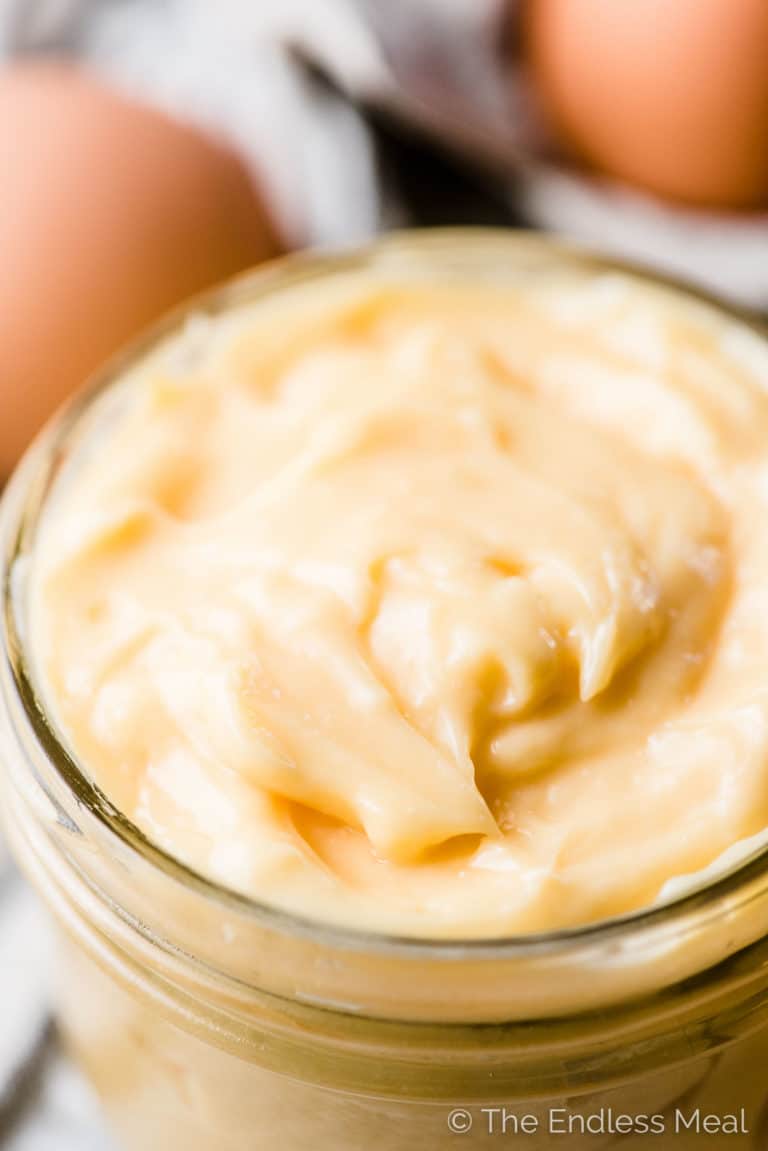
Homemade mayonnaise has a reputation for being tricky to make. But over the years, I’ve learned some tricks so that it turns out perfectly creamy and delicious every time.
If you’ve never made it before, it might seem a bit daunting, but I promise you this: it’s super easy! You don’t need any fancy equipment. What you do need, though, is to read on because I’ll share my top tips for fool-proof homemade mayo.
If you’re a kitchen star and enjoy making things from scratch, try your hand at homemade butter next!
Homemade mayonnaise recipe ingredients
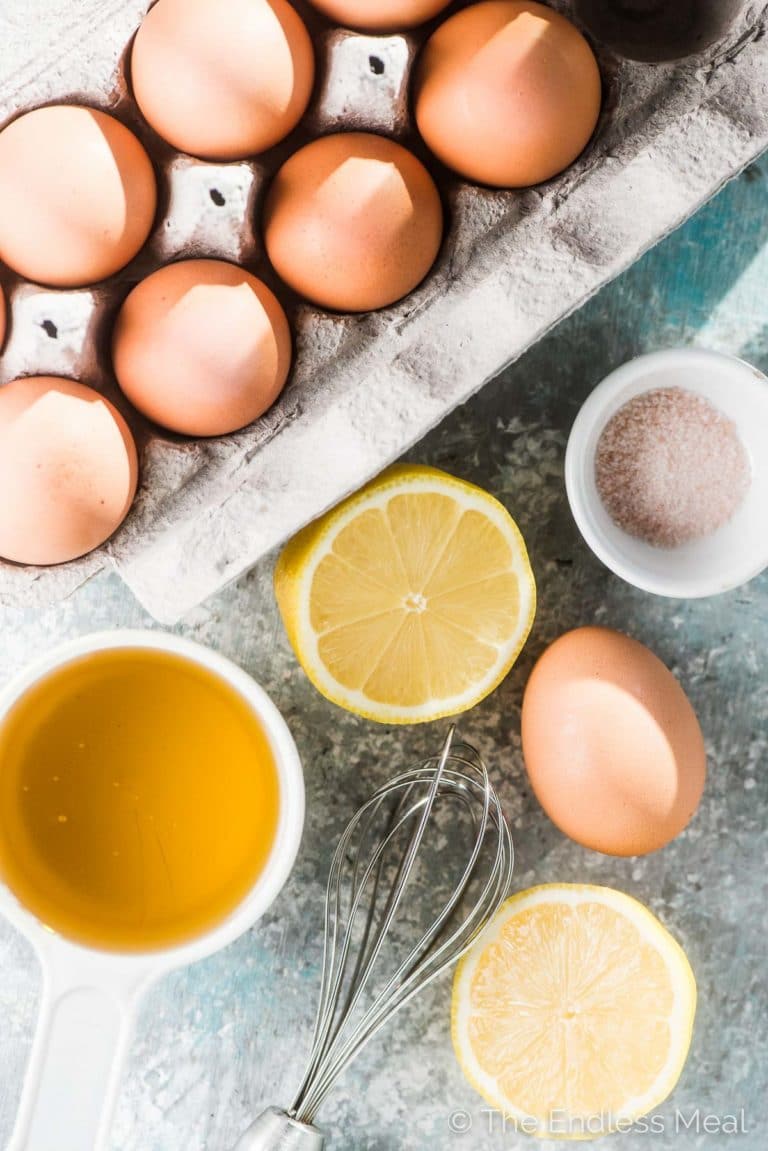
You only need 4 simple ingredients (and a bit of elbow grease) to make this easy homemade mayo recipe, and they’re all common ingredients – no preservatives here! Like all things with food, using better quality ingredients results in a better tasting mayo.
- Egg yolk : Since the egg yolks are used raw, I recommend sourcing an egg from a happy hen for this recipe. I like to save the egg whites for making egg white omelettes !
- Lemon juice : Only fresh lemon juice will do. Steer clear of the stuff that comes in the yellow squeeze bottles as it will make your mayo taste funny.
- Neutral-flavored oil : My go-to is avocado oil, but you can use grape seed oil or vegetable oil. Although I love olive oil, I think it’s too strongly flavored for making mayo.
You’ll also need a pinch of sea salt!
The secret to homemade mayo
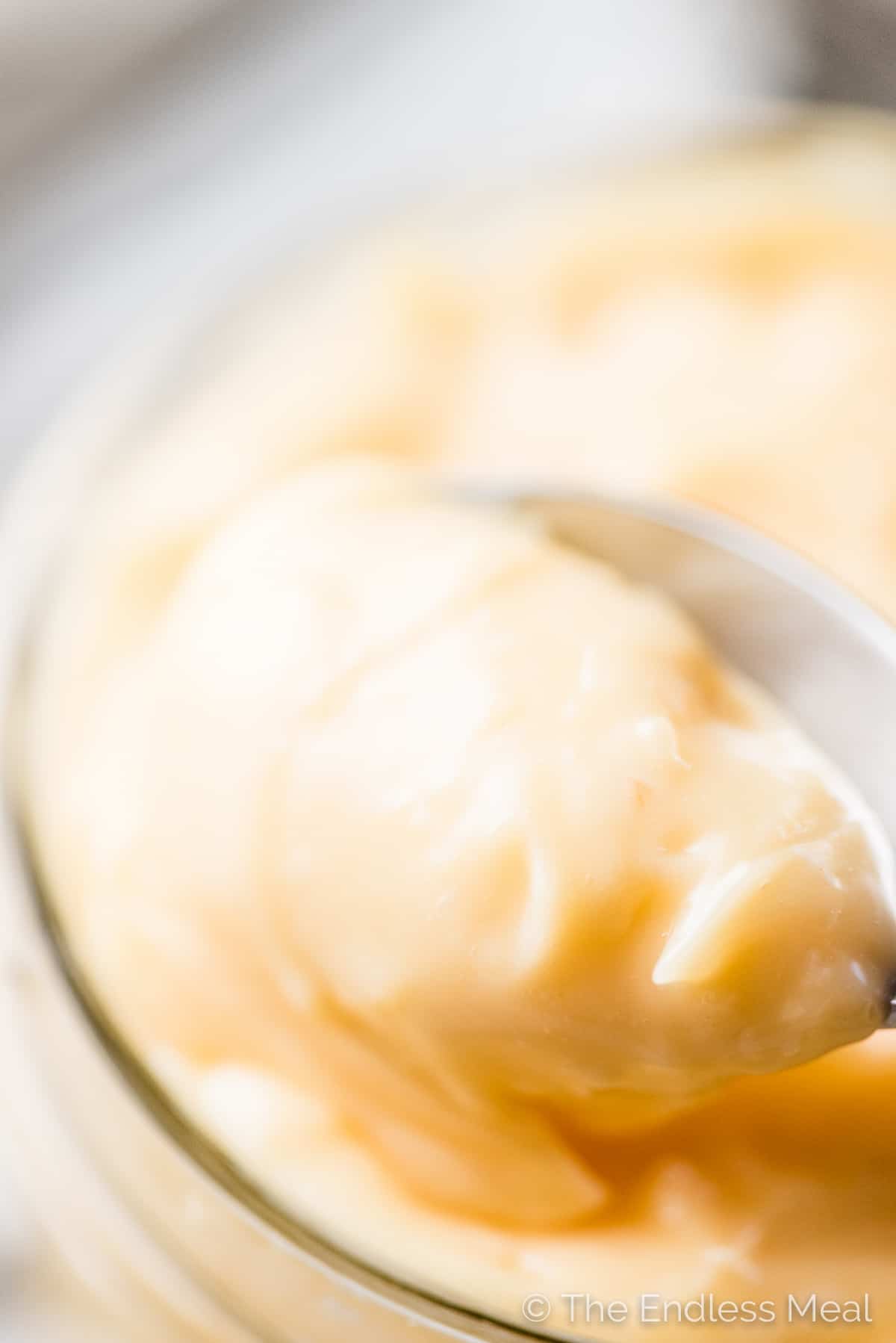
Homemade mayo is incredibly satisfying to make and tastes so much better than store-bought. Everyone should try it at least once to understand what all the fuss is about. Over my years of making mayo, I picked up a list of tricks for the creamiest and richest mayo ever!
However, out of all of the tips I have to share, there are three worth highlighting. They make this homemade mayonnaise recipe literally foolproof. The thing is, when you’re making homemade mayonnaise: It’s really about getting the egg and oil to emulsify. If they don’t, you’ll be left with a sad, runny mess – which nobody wants!
Here are the three things you MUST do to make sure your mayo emulsifies:
- Use a room temperature egg. Whatever you do, don’t pull an egg out of your refrigerator and try to make mayo with it. You might get lucky and it will work, but chances are it won’t. Don’t take the risk! Warm the egg by putting it in a glass, and fill the glass with hot tap water. Leave it for 5 minutes and it will be ready to use.
- Whisk the egg yolk with an acid. I like to use lemon juice, but vinegar works, too. The acid starts to break down the proteins in the egg yolk so they emulsify better. Whisk the egg yolks and lemon juice well before you begin adding the oil.
- Add the oil VERY slowly: When you begin, the oil should be poured in the tiniest stream. Once the mayonnaise begins to thicken, you can pour the oil a little faster. If you ever notice the oil building up, stop pouring it and whisk the mayo briskly until it is incorporated.
Are raw eggs safe to eat?
While the USDA advises against eating raw eggs, the risk of salmonella poisoning is so minimal that it is not something I’ve been concerned about. Actually, I’ve read that a person is more likely to come into contact with Salmonella by eating a celery stalk than a raw egg!
That said, I would feel less confident eating raw eggs if the eggs I bought were of poor quality. This is the time to source eggs from happy hens.
If you don’t feel comfortable eating raw eggs, don’t worry! It’s super easy to make pasteurized eggs at home.
How to pasteurize an egg yolk for homemade mayo
An egg is considered pasteurized and safe to eat when it reaches an internal temperature of 138 degrees Fahrenheit. This is really easy to do at home!
- Place the eggs in a pot of water over medium-high heat. Attach an instant-read thermometer to the side of the pot.
- Bring the water to 140 degrees Fahrenheit and keep it there for 3 minutes. Be careful NOT to let the water rise above 143 degrees, or you will cook your egg yolks.
- Drain the water, and cool the eggs in cold water. That’s it!
Once you do this, your eggs will be 100% safe to eat. The pasteurized egg whites will look a little cloudy because they have begun to cook, but the yolks will be perfect for making mayonnaise!
Can I use a blender to make mayo?
Yep, you can, but you don’t need to. If you use a blender, you risk the mayo separating and becoming runny. A blender is also much more challenging to wash than a whisk and bowl. I’m all for keeping life simple!
If whisking for 5 minutes is difficult for you, then absolutely go ahead and use a blender, food processor, or immersion blender. Follow the directions in the recipe, only blend instead of whisking. Make sure to run your blender on low speed only and add the oil in a slow, steady stream to minimize the risk of your mayo separating.
How do I fix broken mayo?
If your mayonnaise is runny and not thick, the oil has not emulsified. In this case, it’s best to start again. Don’t worry, all is not lost! You can still use the oil that did not emulsify. Whisk a room-temperature egg yolk with lemon juice in a clean bowl and slowly whisk in the runny mayonnaise. Also, use a room-temperature egg yolk—cold egg yolks are more likely to make the mayo runny. Continuously whisk the egg yolk with lemon juice (or vinegar) before slowly adding the oil.
Homemade Mayo Recipe
- Pin

Ingredients
- ▢ 1 large egg yolk (at room temperature)
- ▢ 1 tablespoon lemon juice (fresh is best)
- ▢ 1 cup neutral-flavored oil (I like avocado oil)
- ▢ ¼ – ½ teaspoon sea salt (to taste)
Instructions
- Place the egg yolk in a medium-sized bowl. Add the lemon juice and whisk until frothy. 1 large egg yolk, 1 tablespoon lemon juice
- Very slowly, begin adding the oil in a thin stream while whisking continuously. If the oil starts to build up at all, stop pouring and whisk vigorously until it is incorporated. Continue adding the oil while whisking until all the oil has been used. 1 cup neutral-flavored oil
- Whisk ¼ teaspoon of salt into the mayo. Taste and add more if needed. ¼ – ½ teaspoon sea salt
Video
Notes
Nutrition
We have thoroughly tested this recipe for accuracy. However, individual results may vary. See our full recipe disclosure here .
Did you make this?
We love to see what you made! Tag @theendlessmeal or hashtag #theendlessmeal !
More mayo recipes
Wasabi Mayo
Homemade Chipotle Mayo
Harissa Mayo
Kimchi Mayo
Homemade Mayo Recipe
Ingredients
- 1 large egg yolk , at room temperature
- 1 tablespoon lemon juice , fresh is best
- 1 cup neutral-flavored oil , I like avocado oil
- ¼ - ½ teaspoon sea salt , to taste
Instructions
- Place the egg yolk in a medium-sized bowl. Add the lemon juice and whisk until frothy. 1 large egg yolk, 1 tablespoon lemon juice
- Very slowly, begin adding the oil in a thin stream while whisking continuously. If the oil starts to build up at all, stop pouring and whisk vigorously until it is incorporated. Continue adding the oil while whisking until all the oil has been used. 1 cup neutral-flavored oil
- Whisk ¼ teaspoon of salt into the mayo. Taste and add more if needed. ¼ - ½ teaspoon sea salt
Notes
https://www.theendlessmeal.com/how-to-make-homemade-mayonnaise/
This homemade mayonnaise is my family’s favorite condiment, and it turns out perfectly every time. I’ll teach you how to make it in under 10 minutes with just four ingredients, and I’ll share all the tips I’ve learned over the years!
Homemade mayonnaise has a reputation for being tricky to make. But over the years, I’ve learned some tricks so that it turns out perfectly creamy and delicious every time.
If you’ve never made it before, it might seem a bit daunting, but I promise you this: it’s super easy! You don’t need any fancy equipment. What you do need, though, is to read on because I’ll share my top tips for fool-proof homemade mayo.
If you’re a kitchen star and enjoy making things from scratch, try your hand at homemade butter next!
Homemade mayonnaise recipe ingredients
You only need 4 simple ingredients (and a bit of elbow grease) to make this easy homemade mayo recipe, and they’re all common ingredients – no preservatives here! Like all things with food, using better quality ingredients results in a better tasting mayo.
- Egg yolk : Since the egg yolks are used raw, I recommend sourcing an egg from a happy hen for this recipe. I like to save the egg whites for making egg white omelettes !
- Lemon juice : Only fresh lemon juice will do. Steer clear of the stuff that comes in the yellow squeeze bottles as it will make your mayo taste funny.
- Neutral-flavored oil : My go-to is avocado oil, but you can use grape seed oil or vegetable oil. Although I love olive oil, I think it’s too strongly flavored for making mayo.
You’ll also need a pinch of sea salt!
The secret to homemade mayo
Homemade mayo is incredibly satisfying to make and tastes so much better than store-bought. Everyone should try it at least once to understand what all the fuss is about. Over my years of making mayo, I picked up a list of tricks for the creamiest and richest mayo ever!
However, out of all of the tips I have to share, there are three worth highlighting. They make this homemade mayonnaise recipe literally foolproof. The thing is, when you’re making homemade mayonnaise: It’s really about getting the egg and oil to emulsify. If they don’t, you’ll be left with a sad, runny mess – which nobody wants!
Here are the three things you MUST do to make sure your mayo emulsifies:
- Use a room temperature egg. Whatever you do, don’t pull an egg out of your refrigerator and try to make mayo with it. You might get lucky and it will work, but chances are it won’t. Don’t take the risk! Warm the egg by putting it in a glass, and fill the glass with hot tap water. Leave it for 5 minutes and it will be ready to use.
- Whisk the egg yolk with an acid. I like to use lemon juice, but vinegar works, too. The acid starts to break down the proteins in the egg yolk so they emulsify better. Whisk the egg yolks and lemon juice well before you begin adding the oil.
- Add the oil VERY slowly: When you begin, the oil should be poured in the tiniest stream. Once the mayonnaise begins to thicken, you can pour the oil a little faster. If you ever notice the oil building up, stop pouring it and whisk the mayo briskly until it is incorporated.
Are raw eggs safe to eat?
While the USDA advises against eating raw eggs, the risk of salmonella poisoning is so minimal that it is not something I’ve been concerned about. Actually, I’ve read that a person is more likely to come into contact with Salmonella by eating a celery stalk than a raw egg!
That said, I would feel less confident eating raw eggs if the eggs I bought were of poor quality. This is the time to source eggs from happy hens.
If you don’t feel comfortable eating raw eggs, don’t worry! It’s super easy to make pasteurized eggs at home.
How to pasteurize an egg yolk for homemade mayo
An egg is considered pasteurized and safe to eat when it reaches an internal temperature of 138 degrees Fahrenheit. This is really easy to do at home!
- Place the eggs in a pot of water over medium-high heat. Attach an instant-read thermometer to the side of the pot.
- Bring the water to 140 degrees Fahrenheit and keep it there for 3 minutes. Be careful NOT to let the water rise above 143 degrees, or you will cook your egg yolks.
- Drain the water, and cool the eggs in cold water. That’s it!
Once you do this, your eggs will be 100% safe to eat. The pasteurized egg whites will look a little cloudy because they have begun to cook, but the yolks will be perfect for making mayonnaise!
Can I use a blender to make mayo?
Yep, you can, but you don’t need to. If you use a blender, you risk the mayo separating and becoming runny. A blender is also much more challenging to wash than a whisk and bowl. I’m all for keeping life simple!
If whisking for 5 minutes is difficult for you, then absolutely go ahead and use a blender, food processor, or immersion blender. Follow the directions in the recipe, only blend instead of whisking. Make sure to run your blender on low speed only and add the oil in a slow, steady stream to minimize the risk of your mayo separating.
How do I fix broken mayo?
If your mayonnaise is runny and not thick, the oil has not emulsified. In this case, it’s best to start again. Don’t worry, all is not lost! You can still use the oil that did not emulsify. Whisk a room-temperature egg yolk with lemon juice in a clean bowl and slowly whisk in the runny mayonnaise. Also, use a room-temperature egg yolk—cold egg yolks are more likely to make the mayo runny. Continuously whisk the egg yolk with lemon juice (or vinegar) before slowly adding the oil.
Homemade Mayo Recipe
- Pin
Ingredients
- ▢ 1 large egg yolk (at room temperature)
- ▢ 1 tablespoon lemon juice (fresh is best)
- ▢ 1 cup neutral-flavored oil (I like avocado oil)
- ▢ ¼ – ½ teaspoon sea salt (to taste)
Instructions
- Place the egg yolk in a medium-sized bowl. Add the lemon juice and whisk until frothy. 1 large egg yolk, 1 tablespoon lemon juice
- Very slowly, begin adding the oil in a thin stream while whisking continuously. If the oil starts to build up at all, stop pouring and whisk vigorously until it is incorporated. Continue adding the oil while whisking until all the oil has been used. 1 cup neutral-flavored oil
- Whisk ¼ teaspoon of salt into the mayo. Taste and add more if needed. ¼ – ½ teaspoon sea salt
Video
Notes
Nutrition
We have thoroughly tested this recipe for accuracy. However, individual results may vary. See our full recipe disclosure here .
Did you make this?
We love to see what you made! Tag @theendlessmeal or hashtag #theendlessmeal !
More mayo recipes
Wasabi Mayo
Homemade Chipotle Mayo
Harissa Mayo
Kimchi Mayo
This homemade mayonnaise is my family’s favorite condiment, and it turns out perfectly every time. I’ll teach you how to make it in under 10 minutes with just four ingredients, and I’ll share all the tips I’ve learned over the years!
Homemade mayonnaise has a reputation for being tricky to make. But over the years, I’ve learned some tricks so that it turns out perfectly creamy and delicious every time.
If you’ve never made it before, it might seem a bit daunting, but I promise you this: it’s super easy! You don’t need any fancy equipment. What you do need, though, is to read on because I’ll share my top tips for fool-proof homemade mayo.
If you’re a kitchen star and enjoy making things from scratch, try your hand at homemade butter next!
Homemade mayonnaise recipe ingredients
You only need 4 simple ingredients (and a bit of elbow grease) to make this easy homemade mayo recipe, and they’re all common ingredients – no preservatives here! Like all things with food, using better quality ingredients results in a better tasting mayo.
- Egg yolk : Since the egg yolks are used raw, I recommend sourcing an egg from a happy hen for this recipe. I like to save the egg whites for making egg white omelettes !
- Lemon juice : Only fresh lemon juice will do. Steer clear of the stuff that comes in the yellow squeeze bottles as it will make your mayo taste funny.
- Neutral-flavored oil : My go-to is avocado oil, but you can use grape seed oil or vegetable oil. Although I love olive oil, I think it’s too strongly flavored for making mayo.
You’ll also need a pinch of sea salt!
The secret to homemade mayo
Homemade mayo is incredibly satisfying to make and tastes so much better than store-bought. Everyone should try it at least once to understand what all the fuss is about. Over my years of making mayo, I picked up a list of tricks for the creamiest and richest mayo ever!
However, out of all of the tips I have to share, there are three worth highlighting. They make this homemade mayonnaise recipe literally foolproof. The thing is, when you’re making homemade mayonnaise: It’s really about getting the egg and oil to emulsify. If they don’t, you’ll be left with a sad, runny mess – which nobody wants!
Here are the three things you MUST do to make sure your mayo emulsifies:
- Use a room temperature egg. Whatever you do, don’t pull an egg out of your refrigerator and try to make mayo with it. You might get lucky and it will work, but chances are it won’t. Don’t take the risk! Warm the egg by putting it in a glass, and fill the glass with hot tap water. Leave it for 5 minutes and it will be ready to use.
- Whisk the egg yolk with an acid. I like to use lemon juice, but vinegar works, too. The acid starts to break down the proteins in the egg yolk so they emulsify better. Whisk the egg yolks and lemon juice well before you begin adding the oil.
- Add the oil VERY slowly: When you begin, the oil should be poured in the tiniest stream. Once the mayonnaise begins to thicken, you can pour the oil a little faster. If you ever notice the oil building up, stop pouring it and whisk the mayo briskly until it is incorporated.
Are raw eggs safe to eat?
While the USDA advises against eating raw eggs, the risk of salmonella poisoning is so minimal that it is not something I’ve been concerned about. Actually, I’ve read that a person is more likely to come into contact with Salmonella by eating a celery stalk than a raw egg!
That said, I would feel less confident eating raw eggs if the eggs I bought were of poor quality. This is the time to source eggs from happy hens.
If you don’t feel comfortable eating raw eggs, don’t worry! It’s super easy to make pasteurized eggs at home.
How to pasteurize an egg yolk for homemade mayo
An egg is considered pasteurized and safe to eat when it reaches an internal temperature of 138 degrees Fahrenheit. This is really easy to do at home!
- Place the eggs in a pot of water over medium-high heat. Attach an instant-read thermometer to the side of the pot.
- Bring the water to 140 degrees Fahrenheit and keep it there for 3 minutes. Be careful NOT to let the water rise above 143 degrees, or you will cook your egg yolks.
- Drain the water, and cool the eggs in cold water. That’s it!
Once you do this, your eggs will be 100% safe to eat. The pasteurized egg whites will look a little cloudy because they have begun to cook, but the yolks will be perfect for making mayonnaise!
Can I use a blender to make mayo?
Yep, you can, but you don’t need to. If you use a blender, you risk the mayo separating and becoming runny. A blender is also much more challenging to wash than a whisk and bowl. I’m all for keeping life simple!
If whisking for 5 minutes is difficult for you, then absolutely go ahead and use a blender, food processor, or immersion blender. Follow the directions in the recipe, only blend instead of whisking. Make sure to run your blender on low speed only and add the oil in a slow, steady stream to minimize the risk of your mayo separating.
How do I fix broken mayo?
If your mayonnaise is runny and not thick, the oil has not emulsified. In this case, it’s best to start again. Don’t worry, all is not lost! You can still use the oil that did not emulsify. Whisk a room-temperature egg yolk with lemon juice in a clean bowl and slowly whisk in the runny mayonnaise. Also, use a room-temperature egg yolk—cold egg yolks are more likely to make the mayo runny. Continuously whisk the egg yolk with lemon juice (or vinegar) before slowly adding the oil.
Homemade Mayo Recipe
- Pin
Ingredients
- ▢ 1 large egg yolk (at room temperature)
- ▢ 1 tablespoon lemon juice (fresh is best)
- ▢ 1 cup neutral-flavored oil (I like avocado oil)
- ▢ ¼ – ½ teaspoon sea salt (to taste)
Instructions
- Place the egg yolk in a medium-sized bowl. Add the lemon juice and whisk until frothy. 1 large egg yolk, 1 tablespoon lemon juice
- Very slowly, begin adding the oil in a thin stream while whisking continuously. If the oil starts to build up at all, stop pouring and whisk vigorously until it is incorporated. Continue adding the oil while whisking until all the oil has been used. 1 cup neutral-flavored oil
- Whisk ¼ teaspoon of salt into the mayo. Taste and add more if needed. ¼ – ½ teaspoon sea salt
Video
Notes
Nutrition
We have thoroughly tested this recipe for accuracy. However, individual results may vary. See our full recipe disclosure here .
Did you make this?
We love to see what you made! Tag @theendlessmeal or hashtag #theendlessmeal !
More mayo recipes
Wasabi Mayo
Homemade Chipotle Mayo
Harissa Mayo
Kimchi Mayo
This homemade mayonnaise is my family’s favorite condiment, and it turns out perfectly every time. I’ll teach you how to make it in under 10 minutes with just four ingredients, and I’ll share all the tips I’ve learned over the years!
Homemade mayonnaise has a reputation for being tricky to make. But over the years, I’ve learned some tricks so that it turns out perfectly creamy and delicious every time.
If you’ve never made it before, it might seem a bit daunting, but I promise you this: it’s super easy! You don’t need any fancy equipment. What you do need, though, is to read on because I’ll share my top tips for fool-proof homemade mayo.
If you’re a kitchen star and enjoy making things from scratch, try your hand at homemade butter next!
Homemade mayonnaise recipe ingredients
You only need 4 simple ingredients (and a bit of elbow grease) to make this easy homemade mayo recipe, and they’re all common ingredients – no preservatives here! Like all things with food, using better quality ingredients results in a better tasting mayo.
- Egg yolk : Since the egg yolks are used raw, I recommend sourcing an egg from a happy hen for this recipe. I like to save the egg whites for making egg white omelettes !
- Lemon juice : Only fresh lemon juice will do. Steer clear of the stuff that comes in the yellow squeeze bottles as it will make your mayo taste funny.
- Neutral-flavored oil : My go-to is avocado oil, but you can use grape seed oil or vegetable oil. Although I love olive oil, I think it’s too strongly flavored for making mayo.
You’ll also need a pinch of sea salt!
The secret to homemade mayo
Homemade mayo is incredibly satisfying to make and tastes so much better than store-bought. Everyone should try it at least once to understand what all the fuss is about. Over my years of making mayo, I picked up a list of tricks for the creamiest and richest mayo ever!
However, out of all of the tips I have to share, there are three worth highlighting. They make this homemade mayonnaise recipe literally foolproof. The thing is, when you’re making homemade mayonnaise: It’s really about getting the egg and oil to emulsify. If they don’t, you’ll be left with a sad, runny mess – which nobody wants!
Here are the three things you MUST do to make sure your mayo emulsifies:
- Use a room temperature egg. Whatever you do, don’t pull an egg out of your refrigerator and try to make mayo with it. You might get lucky and it will work, but chances are it won’t. Don’t take the risk! Warm the egg by putting it in a glass, and fill the glass with hot tap water. Leave it for 5 minutes and it will be ready to use.
- Whisk the egg yolk with an acid. I like to use lemon juice, but vinegar works, too. The acid starts to break down the proteins in the egg yolk so they emulsify better. Whisk the egg yolks and lemon juice well before you begin adding the oil.
- Add the oil VERY slowly: When you begin, the oil should be poured in the tiniest stream. Once the mayonnaise begins to thicken, you can pour the oil a little faster. If you ever notice the oil building up, stop pouring it and whisk the mayo briskly until it is incorporated.
Are raw eggs safe to eat?
While the USDA advises against eating raw eggs, the risk of salmonella poisoning is so minimal that it is not something I’ve been concerned about. Actually, I’ve read that a person is more likely to come into contact with Salmonella by eating a celery stalk than a raw egg!
That said, I would feel less confident eating raw eggs if the eggs I bought were of poor quality. This is the time to source eggs from happy hens.
If you don’t feel comfortable eating raw eggs, don’t worry! It’s super easy to make pasteurized eggs at home.
How to pasteurize an egg yolk for homemade mayo
An egg is considered pasteurized and safe to eat when it reaches an internal temperature of 138 degrees Fahrenheit. This is really easy to do at home!
- Place the eggs in a pot of water over medium-high heat. Attach an instant-read thermometer to the side of the pot.
- Bring the water to 140 degrees Fahrenheit and keep it there for 3 minutes. Be careful NOT to let the water rise above 143 degrees, or you will cook your egg yolks.
- Drain the water, and cool the eggs in cold water. That’s it!
Once you do this, your eggs will be 100% safe to eat. The pasteurized egg whites will look a little cloudy because they have begun to cook, but the yolks will be perfect for making mayonnaise!
Can I use a blender to make mayo?
Yep, you can, but you don’t need to. If you use a blender, you risk the mayo separating and becoming runny. A blender is also much more challenging to wash than a whisk and bowl. I’m all for keeping life simple!
If whisking for 5 minutes is difficult for you, then absolutely go ahead and use a blender, food processor, or immersion blender. Follow the directions in the recipe, only blend instead of whisking. Make sure to run your blender on low speed only and add the oil in a slow, steady stream to minimize the risk of your mayo separating.
How do I fix broken mayo?
If your mayonnaise is runny and not thick, the oil has not emulsified. In this case, it’s best to start again. Don’t worry, all is not lost! You can still use the oil that did not emulsify. Whisk a room-temperature egg yolk with lemon juice in a clean bowl and slowly whisk in the runny mayonnaise. Also, use a room-temperature egg yolk—cold egg yolks are more likely to make the mayo runny. Continuously whisk the egg yolk with lemon juice (or vinegar) before slowly adding the oil.
Homemade Mayo Recipe
- Pin
Ingredients
- ▢ 1 large egg yolk (at room temperature)
- ▢ 1 tablespoon lemon juice (fresh is best)
- ▢ 1 cup neutral-flavored oil (I like avocado oil)
- ▢ ¼ – ½ teaspoon sea salt (to taste)
Instructions
- Place the egg yolk in a medium-sized bowl. Add the lemon juice and whisk until frothy. 1 large egg yolk, 1 tablespoon lemon juice
- Very slowly, begin adding the oil in a thin stream while whisking continuously. If the oil starts to build up at all, stop pouring and whisk vigorously until it is incorporated. Continue adding the oil while whisking until all the oil has been used. 1 cup neutral-flavored oil
- Whisk ¼ teaspoon of salt into the mayo. Taste and add more if needed. ¼ – ½ teaspoon sea salt
Video
Notes
Nutrition
We have thoroughly tested this recipe for accuracy. However, individual results may vary. See our full recipe disclosure here .
Did you make this?
We love to see what you made! Tag @theendlessmeal or hashtag #theendlessmeal !
